Sole designer at Stargaze
2023-2025
I joined as the founding designer to define how NFTs should live on-chain. When I joined Stargaze, NFTs were often loud and chaotic. We wanted to build something calmer, a space for creators and communities to connect with confidence. I designed the early product from the ground up, crafting the tone, visuals and flows that made complex blockchain actions feel like simple creative gestures.
Stargaze is a community-driven NFT app chain in the Cosmos ecosystem. Powered by IBC, it enables multi-token listings, fast trades, and real ownership for creators and collectors.
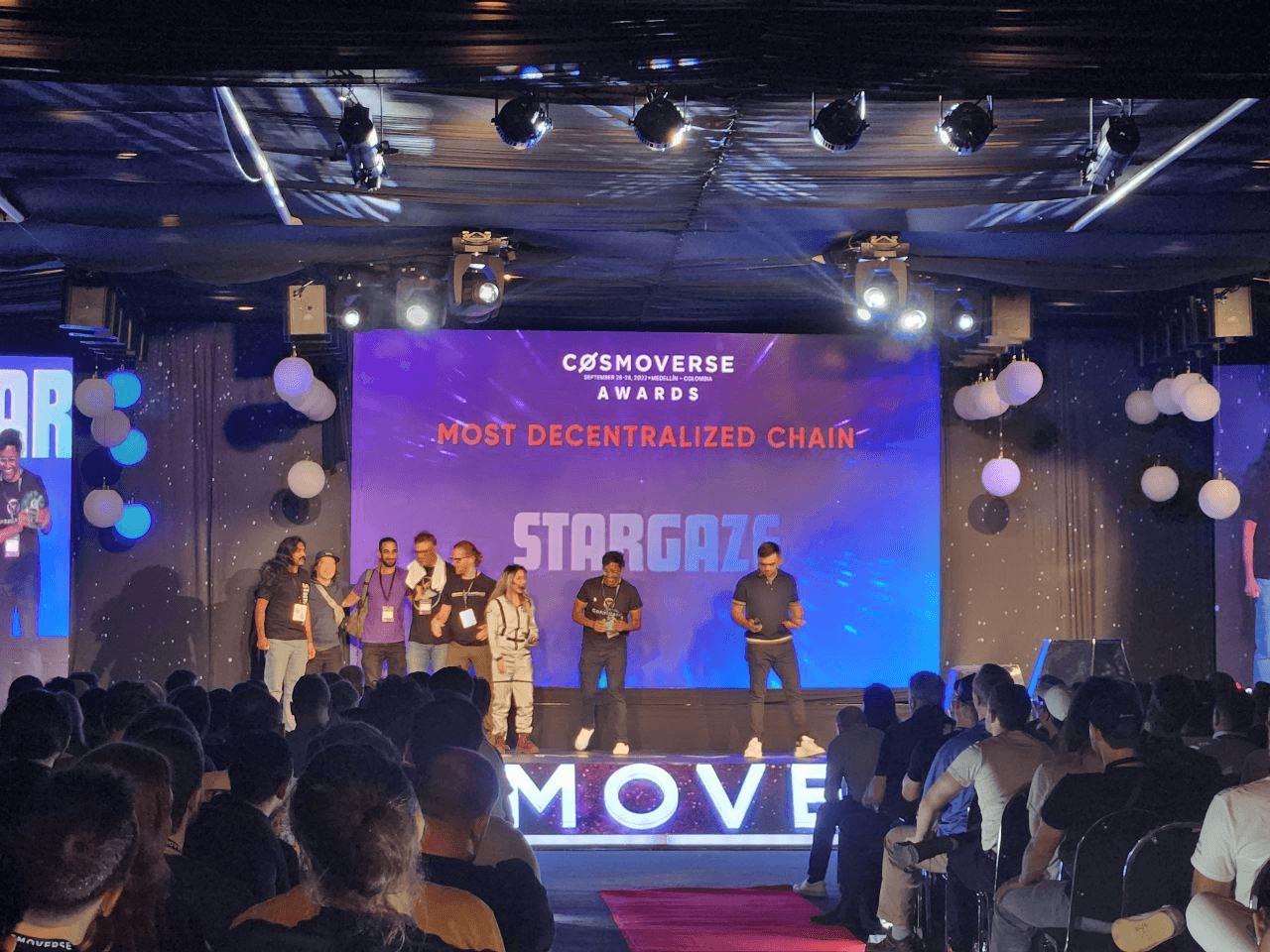
With collections like Bad Kids, Celestial Sloths, and Celestia Originals, Stargaze has become the creative heart of Cosmos, crossing fifty million dollars in volume and redefining what NFT ecosystems can feel like.
Impact
What I shipped
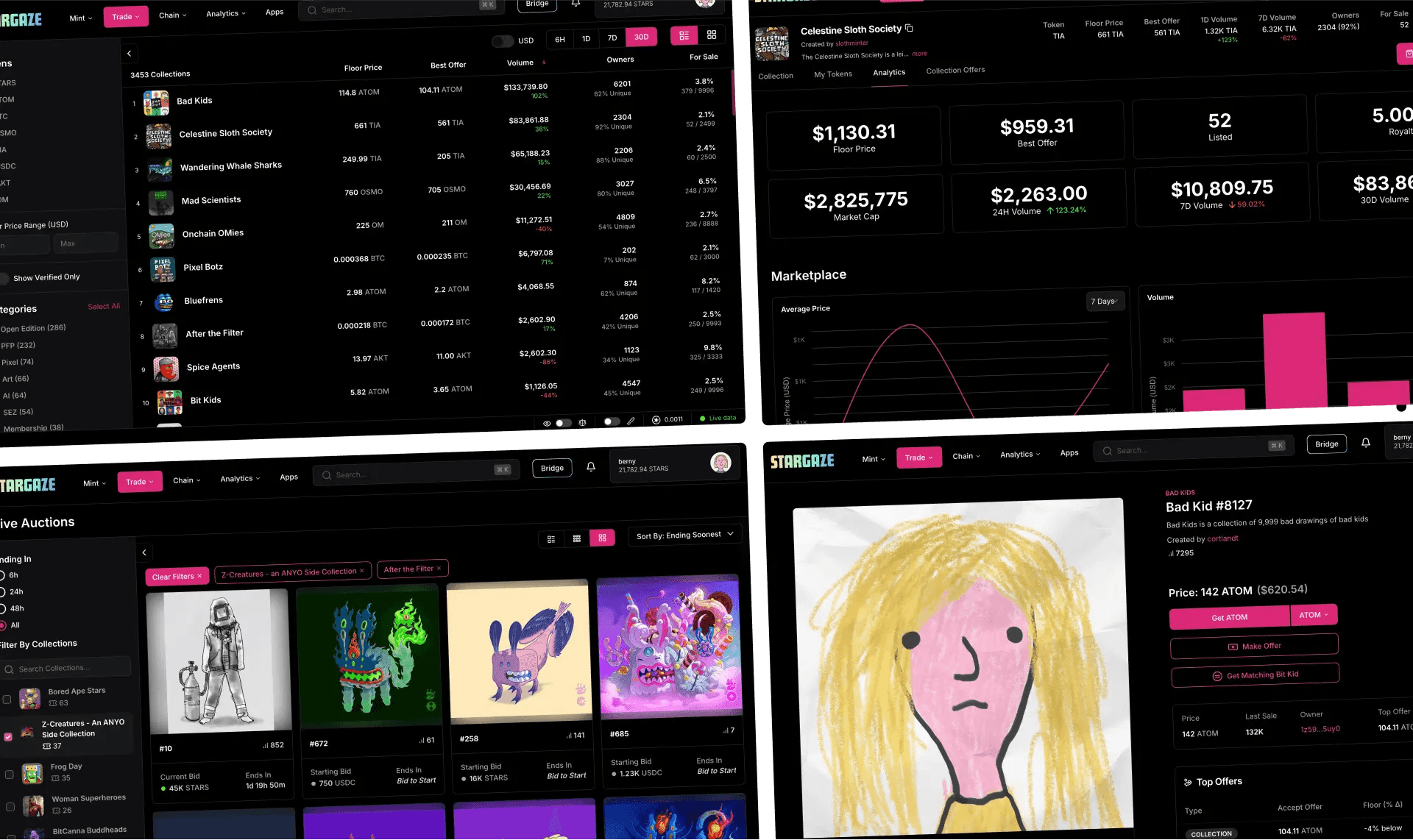
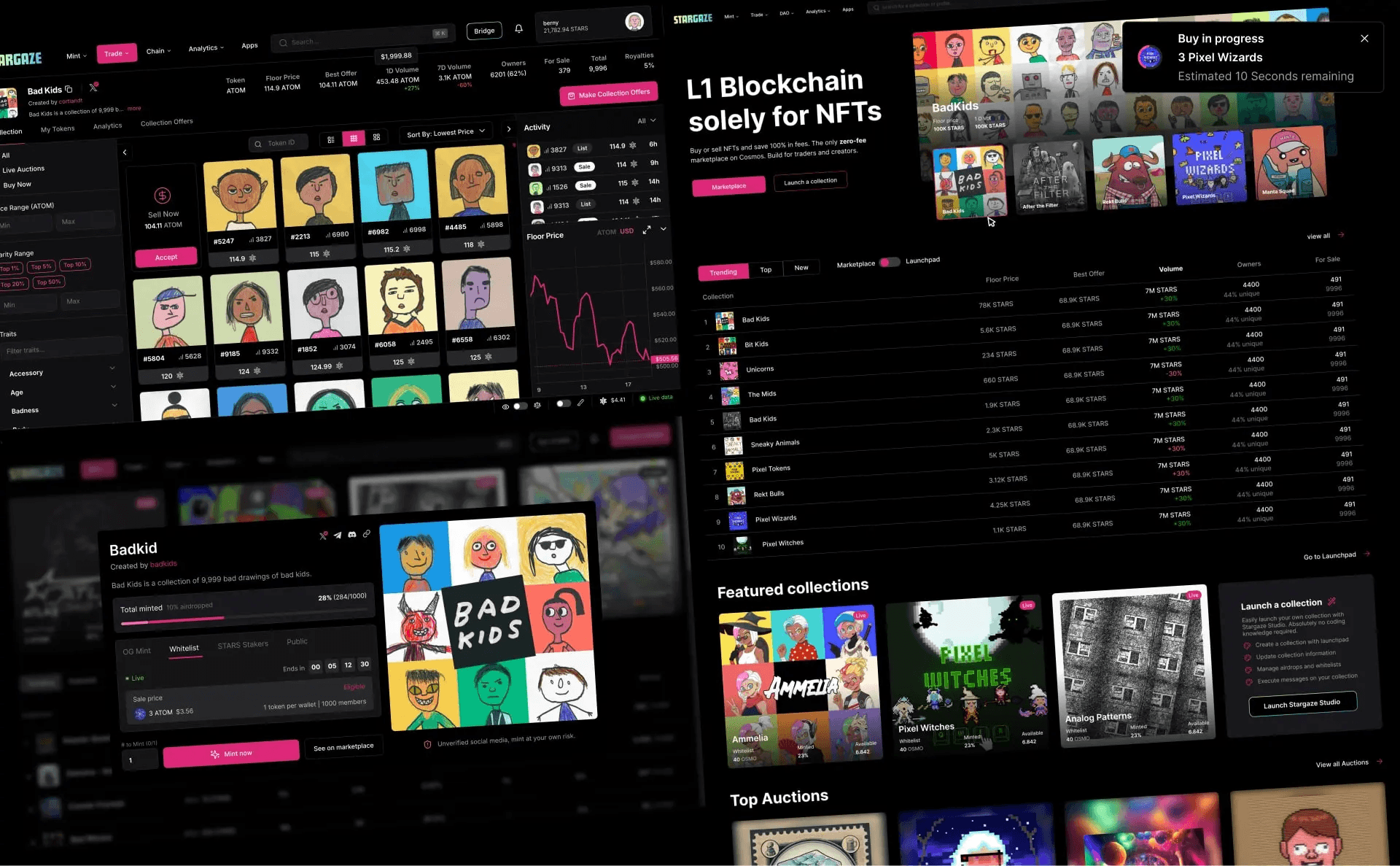
I led the design of the marketplace, the identity system, and Stargaze Studio, Stargaze names, Branding, and the no-code creator tool that lets artists launch collections without writing a single line of code. That single product choice lowered the barrier to entry and changed the shape of the ecosystem.
Then came real-world moments that proved design’s value:
More creators launch without technical help. Studio turned a multi step, developer heavy process into a single visual flow. The result was faster launches and more diversity in collections.
The chain is a cultural home for on-chain art. Collections like Bad Kids and Celestine Sloth Society grew strong floor prices and community attention, showing that design plus tooling can create real cultural moments, not just transactions.
The product supported meaningful economic activity. Stargaze’s marketplace and multi token listings contributed to tens of millions in trade volume across the chain, demonstrating that the UX I helped build could scale to real economic value.
High profile collections like Bad Kids sold out and sustained strong secondary markets, proving that when minting is friction free the community can focus on craft and curation rather than tooling
Design wins I owned
Reduced cognitive load for first time creators by turning multi step contract setup into a single page flow. The UI used clear affordances, progressive disclosure, and friendly microcopy so people could act without fear.
Created Stargaze Names so social actions felt human and discoverable. Replacing raw addresses with recognisable profiles increased social signals and repeat visits. This contributed to stronger retention and community habits on chain
Strong retention among active users: internal cohort retention around 38 percent after identity and Studio launches. (internal metric)
Faster creator launches: launch time reduced from days to minutes for Studio users, lowering the barrier to ship and iterate.
Stargaze rebrand
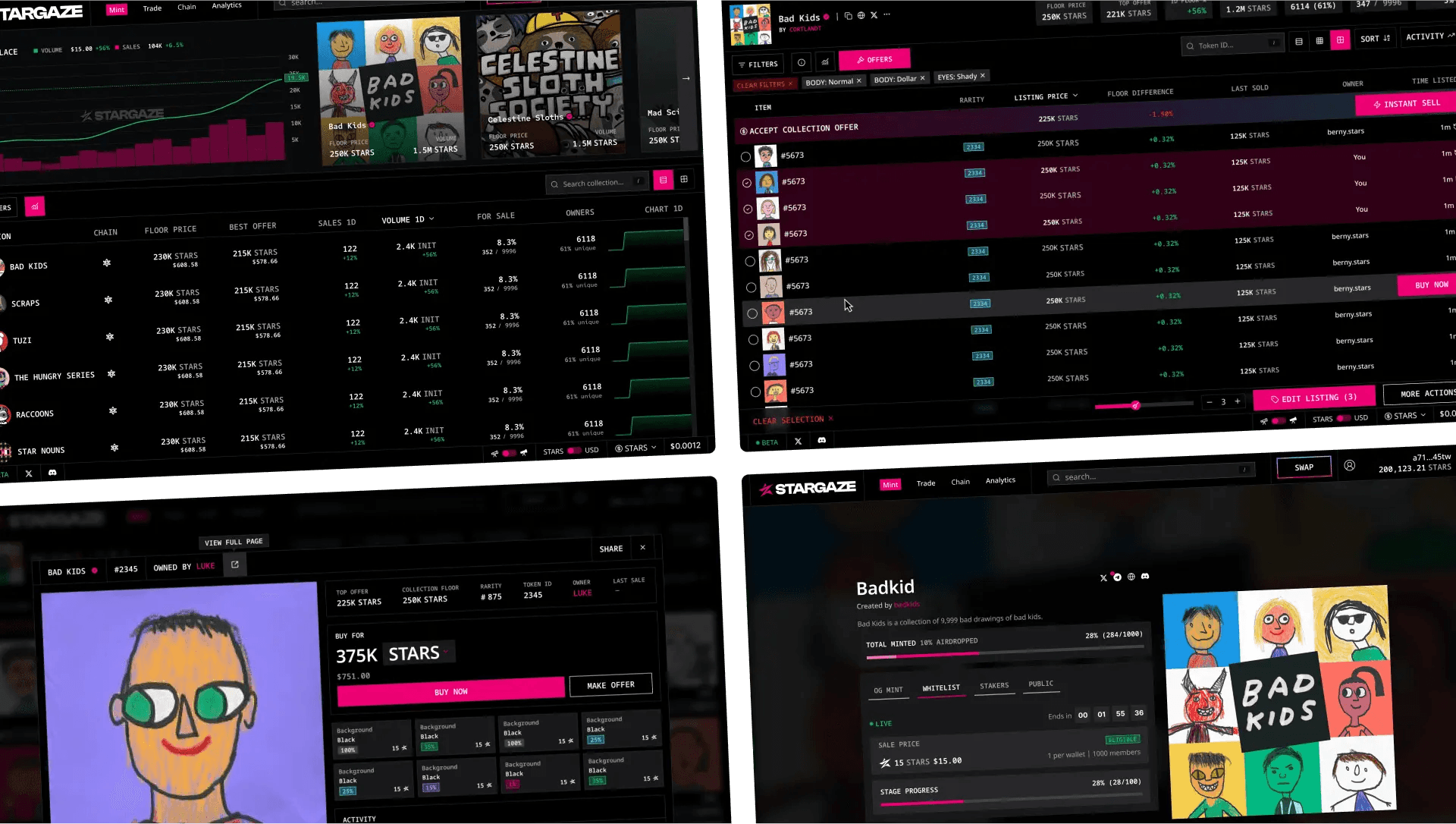
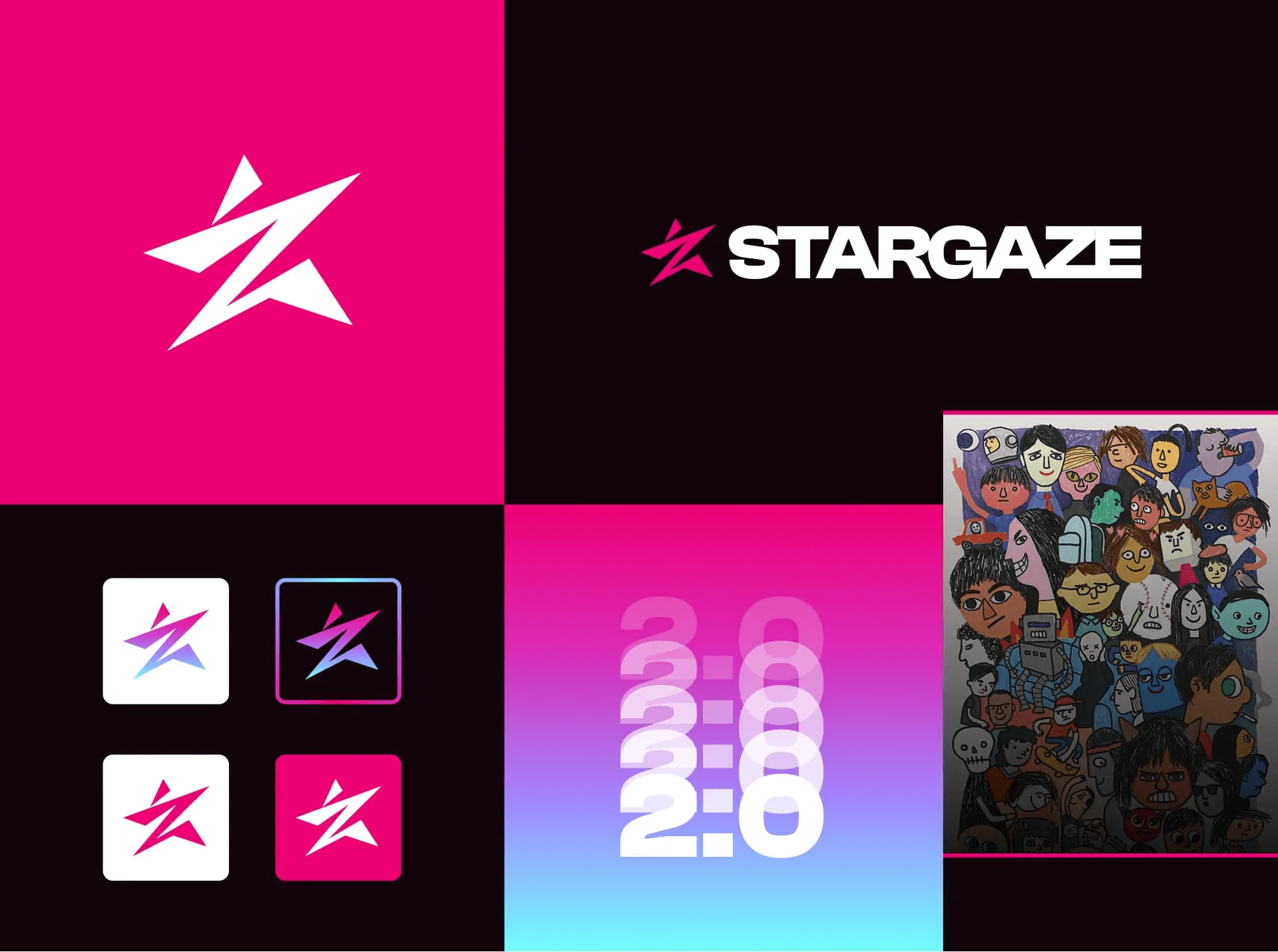
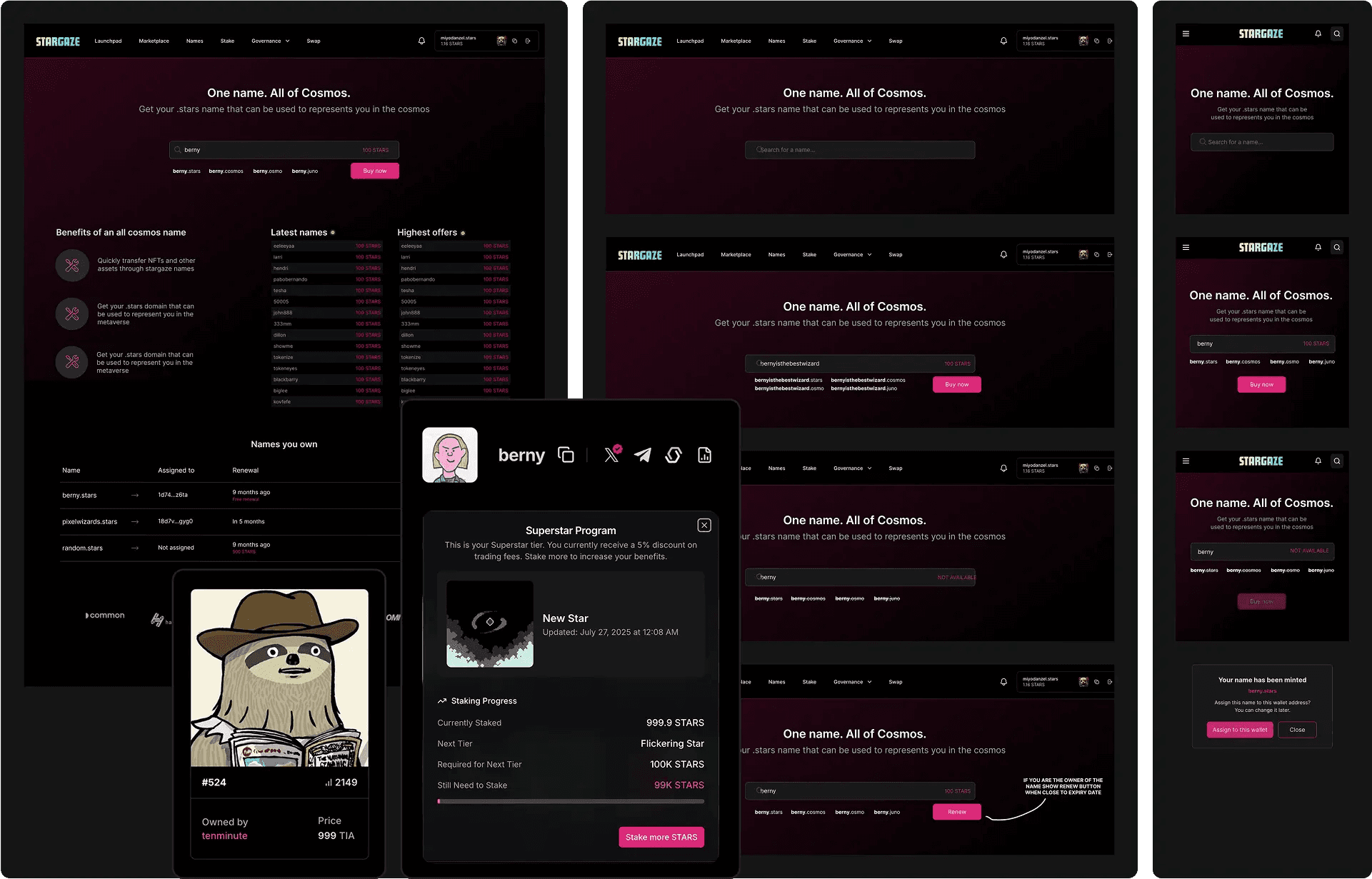
When Stargaze was getting ready to go cross-chain, I led the rebranding to match its new phase of growth. The old identity was fun but a bit scattered, it didn’t reflect how ambitious the project had become. So I rebuilt the entire design system from the ground up using Atomic Design principles. Everything from colors and typography to button states and icons was rethought to make the brand feel fast, clean, and ready to scale.
I wanted the experience to feel familiar to crypto natives yet welcoming for newcomers, especially those coming from EVM chains. That meant refining the NFT launch flow, simplifying the conversion process, and writing microcopy that explained complex things in plain language. The new brand wasn’t just about visuals—it gave Stargaze a clear voice and a recognizable presence across the ecosystem. After the launch, community sentiment shifted almost instantly. People started calling it “the chain for NFTs,” which was exactly what we set out to build.
A concrete example to show the success of UX
An artist without any dev experience used Stargaze Studio to create, whitelist, and launch a 1,000 piece collection in under an hour. The collection was featured on the marketplace, social traction grew, and secondary trading began within days. Designers I admire at other NFT teams often say the moment a creator says “that felt like publishing” is the clearest validation of UX. We designed for that moment.
Challenge
Designing Stargaze meant solving for two very different users. Crypto-native collectors wanted full control, while creators wanted simple, no-code tools to mint and launch. I layered complexity: default flows for beginners and optional advanced features for power users, similar to patterns at OpenSea and Magic Eden. Cross-chain mechanics could have been confusing, so I simplified interactions with clear progress indicators, confirmations, and feedback, letting users focus on creating and trading without worrying about the technical details.
Rebranding and building the design system showed me the value of clarity and consistency. Using Atomic Design principles, I unified Studio, marketplace, and identity flows, making the product feel cohesive and trustworthy. Microcopy became a key tool to guide users, and seeing creators successfully launch collections without touching code proved that design can build confidence, ownership, and delight in a complex NFT ecosystem.
Miyo Danzel 2025